Introduction
Building a successful network marketing business involves more than recruiting new distributors. It requires consistent support throughout their journey, from registration and onboarding to sales, team development, leadership, and long-term engagement. Each stage can influence how confidently distributors participate in the business.
As a network grows, tracking registrations, sponsor relationships, training, sales, commissions, rank progression, and engagement manually can become challenging. Having organized information helps businesses understand distributor activity and provide timely support when needed.
MLM software brings these activities together within a centralized platform. By connecting important distributor data, businesses can create a structured experience, improve visibility, and support stronger relationships throughout the complete distributor journey.
Understanding the Complete Distributor Journey
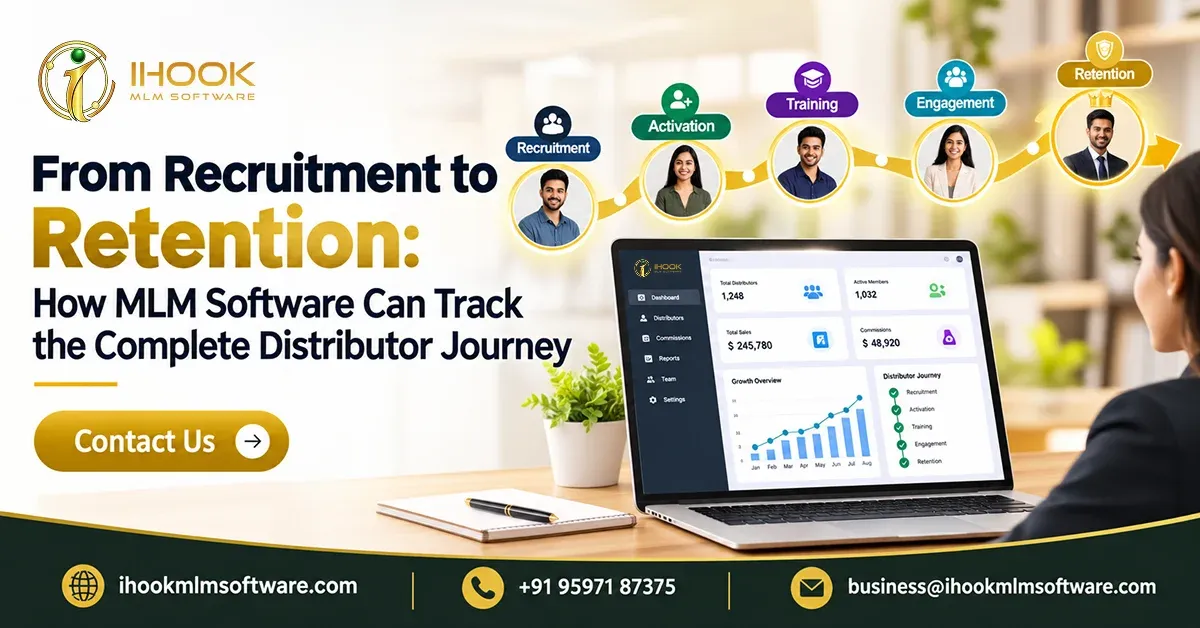
Every distributor experiences network marketing differently. However, their journey often starts with recruitment and continues through registration, onboarding, product engagement, sales, team building, performance development, leadership, and long-term retention. Understanding these stages helps businesses provide the right support at the right time.
A structured technology platform can connect these stages instead of treating them as separate activities.
A typical distributor journey may include:
Tracking this journey gives management a broader view of distributor activity. It also helps sponsors and leaders understand what their team members may need at different stages.
1. Recruitment: Creating a Structured Starting Point
Recruitment is the first stage of the distributor lifecycle. Once a prospect shows interest, important information such as contact details, referral source, sponsor information, and registration status needs to be organized properly.
An MLM distributor management system can centralize this information and help businesses maintain a consistent registration process.
Depending on the business model, the recruitment stage may include:
- Distributor registration
- Sponsor and referral tracking
- Profile creation
- KYC information
- Document submission
- Account verification
- Placement within the network
- Welcome communication
A structured beginning creates a stronger foundation for the stages that follow.
2. Onboarding: Helping New Distributors Get Started
Registration alone does not guarantee active participation. New distributors often need clear guidance about products, business processes, compensation rules, sales activities, and available resources.
An effective onboarding process can make the early experience easier to understand.
MLM software development can support onboarding through centralized dashboards, task management, notifications, training resources, and account information.
For example, a new distributor may be guided through steps such as:
- Completing their profile
- Understanding the product range
- Learning the compensation structure
- Accessing training resources
- Making their first order or sale
- Exploring their network dashboard
- Understanding commissions and business reports
When new members know what to do next, they can approach their business activities with greater clarity.
3. Tracking Early Activity and Engagement
The first stage after onboarding can provide useful information about distributor engagement.
Instead of looking only at the number of registered distributors, businesses can monitor meaningful activities such as logins, orders, sales, training completion, customer interactions, and network-building activities.
A centralized network marketing software platform can organize these activities into dashboards and reports.
This information can help leaders identify different patterns within their network. Some distributors may be highly active, while others may need additional training or communication.
The purpose of tracking should be to provide better support rather than simply collect numbers.
4. Monitoring Sales and Business Activity
Sales activity is an important part of many network marketing businesses. Distributors need convenient access to information about their orders, customers, products, and business performance.
A connected platform can bring relevant information together so distributors do not have to depend entirely on manual records.
Depending on the system, distributors may be able to view:
- Order history
- Product information
- Sales activity
- Customer information
- Team sales
- Business reports
- Commission details
- Rank progress
This visibility can help distributors understand their business more clearly and identify areas where they can improve their daily activities.
5. Supporting Team Building and Network Development
As distributors become more experienced, their journey often moves beyond personal sales toward developing and supporting their teams.
This makes MLM genealogy management an important part of the distributor experience.
A genealogy system can provide a visual representation of sponsor relationships, downline structures, team positions, and other relevant network information.
Leaders can use this information to understand how their teams are developing and where additional guidance may be useful.
Instead of relying on spreadsheets or manually maintained records, a centralized genealogy view can make network information easier to access and organize.
6. Making Performance Progress Easier to Understand
Distributor motivation can be influenced by how clearly they understand their progress.
A well-organized dashboard can show relevant business information such as personal performance, team activity, rank status, sales volume, commissions, and other applicable metrics.
MLM reporting and analytics can also help management identify broader network patterns.
For example, reports can be used to examine:
- New distributor registrations
- Active and inactive members
- Sales performance
- Team growth
- Rank progression
- Commission activity
- Product orders
- Network activity trends
The value of these reports comes from turning business data into information that distributors and managers can actually use.
7. Improving Distributor Communication
Communication is another important part of the distributor journey.
Distributors may need updates about new products, training sessions, company announcements, incentives, order information, or business events. When communication is delayed or difficult to access, important information can be missed.
A centralized platform can support notifications and other communication workflows.
Timely communication can help distributors remain connected with the company and their teams while giving leaders a more organized way to share important information.
8. Recognizing Development and Leadership
The distributor journey does not have to end with regular sales activity. Experienced distributors may develop into team leaders, mentors, and important contributors within the organization.
Tracking performance over time can help businesses understand distributor development.
Rank progression, team growth, sales activity, training completion, and leadership milestones can provide useful indicators of development.
Recognition can then become part of the overall distributor experience. Whether through rank achievements, rewards, incentives, or leadership programs, acknowledging progress can create a more positive environment.
9. Using Data to Support Distributor Retention
Retention begins long before a distributor decides whether to remain active.
When businesses understand the distributor lifecycle, they can identify opportunities to improve the overall experience.
For example, if many new distributors register but fail to complete onboarding, the onboarding process may need improvement. If activity decreases after a particular stage, additional training or communication may be useful. If experienced distributors are struggling to develop their teams, leadership support may be valuable.
This is where MLM analytics can provide meaningful visibility.
Rather than treating retention as a single campaign, businesses can view it as an ongoing process built around distributor experience, communication, education, and support.
10. Creating a Connected Distributor Experience
The biggest advantage of tracking the complete distributor journey is that the different stages can work together.
Recruitment data can connect with onboarding. Onboarding can connect with training. Training can connect with activity. Activity can connect with sales and team development. Performance data can then support leadership and retention initiatives.
This creates a more connected business environment.
For distributors, it means having important information available in one place. For management, it means having a clearer understanding of how the network is developing.
The exact modules required will depend on the company's compensation plan, products, market, network structure, and operational requirements. The technology should therefore support the business model rather than force the business into an unsuitable workflow.
Conclusion
The distributor journey extends far beyond recruitment, covering onboarding, product engagement, sales, team building, performance development, leadership, and long-term participation. Understanding each stage helps network marketing businesses create a more connected and supportive experience.
Modern MLM software brings distributor information, genealogy, sales activity, reporting, communication, and performance data into one organized platform. This visibility can help businesses make informed decisions while giving distributors clearer insights into their progress.
For businesses looking to manage this journey efficiently, IHook MLM Software provides a centralized solution for organizing key network operations. With the right technology, businesses can strengthen distributor engagement and build a structured foundation for sustainable network growth.
Frequently Asked Questions
1. What is a distributor journey in MLM?
A distributor journey refers to the different stages a distributor experiences within a network marketing business. It can include recruitment, registration, onboarding, training, sales, team building, performance development, leadership, and retention.
2. How can MLM software track distributor activity?
MLM software can centralize distributor profiles, sponsor relationships, genealogy information, orders, sales activity, commissions, rank progress, reports, and other relevant business data. This allows businesses to monitor important activities through centralized dashboards and reporting tools.
3. Why is distributor onboarding important?
Onboarding helps new distributors understand the products, business processes, compensation structure, available resources, and the activities they need to complete. A structured onboarding experience can make it easier for new members to begin participating in the business.
4. Can MLM software help improve distributor retention?
MLM software can support retention by improving visibility, communication, onboarding, training access, performance tracking, and distributor support. Analytics can also help businesses understand activity patterns and identify areas where distributors may need additional assistance.
5. What features should businesses consider for distributor lifecycle management?
Businesses can consider features such as distributor management, genealogy management, onboarding workflows, sales and order management, commission tracking, rank management, dashboards, communication tools, reporting, analytics, and mobile access. The appropriate features depend on the company's business model and operational requirements.